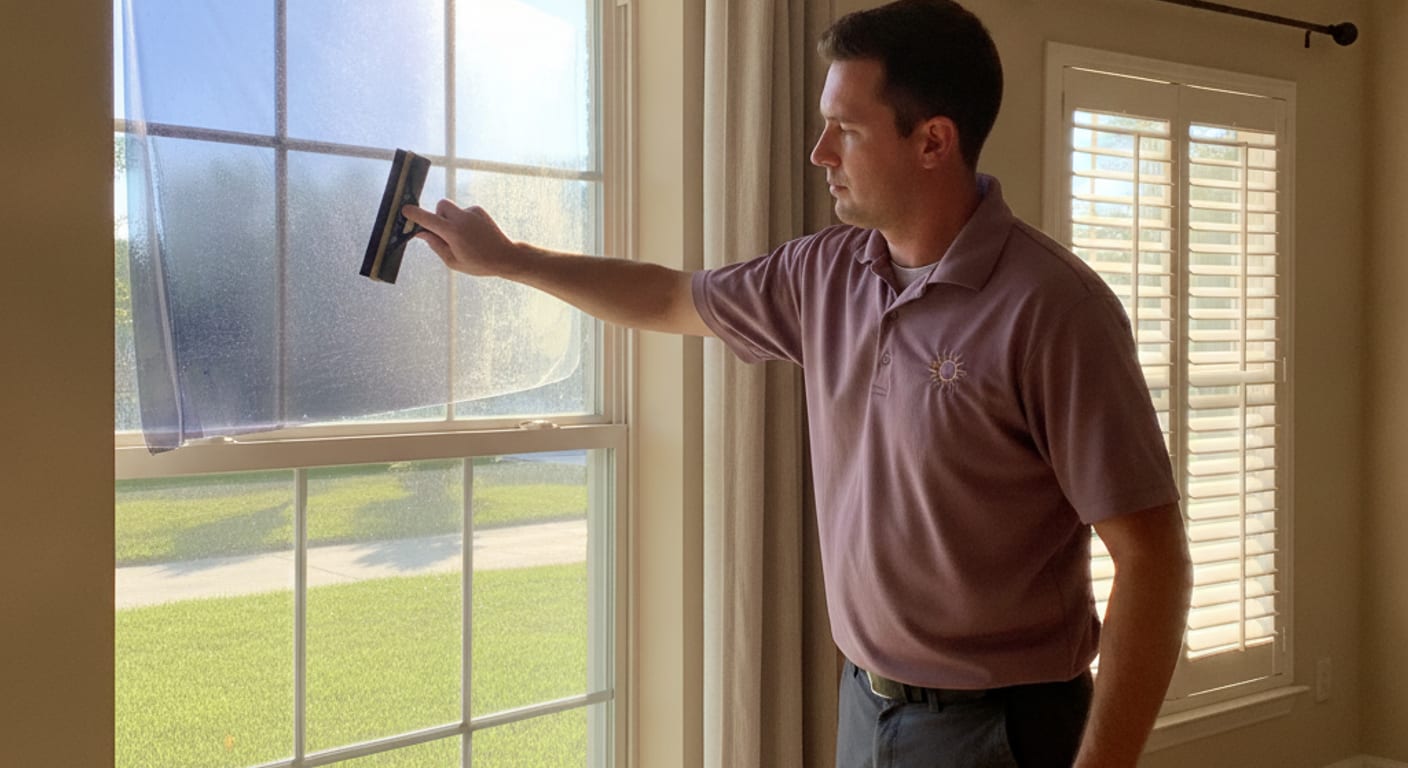
Solar window film solves a specific problem that shades and blinds don’t: constant heat and UV exposure through the glass itself, all day, whether or not anyone remembers to lower a shade. For a west-facing room in a Pinellas County home, or a condo with HOA rules that restrict exterior treatments, film is often the most practical answer available.
What window film actually is
Solar window film is a thin, adhesive-backed material applied directly to the interior surface of your existing glass. It doesn’t replace the window or require new glazing, which makes it considerably less invasive and less expensive than a full window replacement while still delivering a real reduction in heat gain and UV transmission.
Film comes in a handful of construction types, and the differences matter more than the marketing usually suggests.
The three main film types
Dyed film uses a layer of dye to absorb solar energy, and it’s the most affordable option available. It provides decent heat and glare reduction but generally sits at the lower end of performance and can fade or discolor faster than premium alternatives over years of Florida sun exposure.
Reflective film uses a metallic layer to reflect solar energy away from the glass rather than absorbing it. It delivers strong heat rejection and adds a visible mirrored look from outside during the day, which some homeowners want for extra privacy and some don’t. Reflective film can also interfere with cell and radio signal in some cases, worth asking about if that’s a concern.
Ceramic film is the premium option, using nano-ceramic particles to reject heat and UV without the metallic reflectivity or the fading issues associated with dyed film. Ceramic stays nearly clear from both inside and outside, delivers the strongest heat rejection of the three types, and carries the longest warranty life. It also costs the most.
Realistic performance numbers
Quality solar films generally reject 45-65% of solar heat passing through the glass, depending on the specific product and grade chosen, with ceramic films typically landing at the higher end of that range. UV blocking runs even higher, with most quality films blocking up to 99% of UV rays regardless of visible tint level.
These numbers matter because UV, not visible light, is the primary driver of fading in flooring, furniture, and artwork near windows. A film that blocks nearly all UV protects your interior finishes even if the heat-rejection number isn’t the highest available, which is worth knowing if visible clarity matters more to you than maximum heat performance.
Where film makes the most sense in a Pinellas home
West- and south-facing rooms taking Florida’s harshest afternoon sun are the clearest use case. If a specific room runs noticeably hotter than the rest of the house by mid-afternoon, or if you’re seeing visible fade lines on flooring or furniture near a window, film addresses both problems directly and continuously, with no daily action required.
HOA and condo restrictions come up constantly in Gulf Beaches high-rises, where building associations often restrict exterior treatments, shutters, awnings, exterior screens, but allow interior film since it doesn’t change the building’s appearance from outside. This makes solar window film a common workaround for condo owners who want heat and glare control but are limited on what they can install.
Sunrooms and Florida rooms without their own dedicated AC zone benefit heavily from film, since these spaces often see the most direct, sustained sun exposure of any room in the house and the heat gain compounds fast without a mitigating layer on the glass.
Home offices and media rooms dealing with screen glare get a secondary benefit from film beyond heat control, since reduced glare through the window makes a monitor or TV screen genuinely easier to see during the day.
Film versus a shade: when each wins
Film reduces heat and UV coming through the glass constantly, all day, without requiring anyone to open or close anything. That consistency is its biggest strength, particularly for a room that gets forgotten during the day when nobody’s actively managing shades.
A cellular shade adds real insulation value on top of light control, but only when it’s actually lowered. If a shade sits open most of the day for the view or the natural light, it isn’t doing its insulating job during exactly the hours the sun is strongest.
A number of homeowners in the hottest rooms end up using both together: film on the glass for constant heat rejection, a cellular or roller shade behind it for privacy, additional insulation, and full light control on demand. Neither product makes the other redundant.
What it costs and how long it lasts
Solar window film typically runs $6-15 per square foot installed, with standard dyed film at the lower end and premium ceramic film at the higher end. A full-house install across a dozen or more windows often lands somewhere between $1,500 and $4,000 depending on film grade and total glass area.
Quality film typically carries a manufacturer warranty of 10-15 years and holds up well against Florida’s intense UV exposure, since resisting UV degradation is essentially the film’s entire job. Lower-grade film can bubble, discolor, or peel sooner, particularly on south- and west-facing glass taking the most direct sun, which is part of why proper surface prep and quality material matter more here than in a milder climate.
Rebates and current program status
Some utility providers periodically offer rebate programs for energy-efficient upgrades including window film, but these programs change and run out over time, and the specific amounts available shift year to year. Confirm what’s currently active directly with your utility provider at the time you’re getting quotes rather than assuming a program you heard about previously is still running.
What install day actually looks like
Film installation is one of the least disruptive window treatment projects available. There’s no manufacturing lead time to wait through since installers apply the film to your existing glass directly, no measuring for custom fabrication weeks in advance. Most single-family homes with a dozen or more windows are completed in a single day, and the installer cleans and preps each pane of glass thoroughly before applying the film to avoid trapping dust or debris underneath, which can cause visible bubbling later if surface prep is rushed.
You’ll typically be asked to avoid washing the treated windows for a short curing period after install while the adhesive fully sets, and after that window closes, film requires essentially no special maintenance beyond normal glass cleaning with a non-abrasive cleaner.
What to ask before you commit to a film grade
Ask specifically about the heat-rejection and UV-block percentages for the exact product being quoted, not a general category average. Ask whether the warranty covers bubbling, peeling, and discoloration, and for how many years. And if reflectivity or signal interference is a concern for your household, ask directly whether the recommended film type has any known impact before committing to a whole-house install.
How much heat does solar window film actually block?
Quality solar films generally reject 45-65% of solar heat passing through the glass, with ceramic film typically at the higher end of that range. UV blocking runs even higher, with most quality films blocking up to 99% of UV rays regardless of visible tint.
Will film make my windows look dark or mirrored?
It depends on the type. Ceramic film stays nearly clear while still delivering strong heat rejection. Reflective film gives a visible mirrored look from outside during the day, which some homeowners want for privacy and some prefer to avoid. Dyed film sits somewhere in between depending on the specific tint level chosen.
Is film as effective as a shade or shutter?
They solve different problems. Film reduces heat and UV constantly, all day, without any action needed. A cellular shade adds insulation and full light control, but only when lowered. Many homeowners in the hottest rooms use both together for the strongest combined result.
How long does solar window film last in Florida?
Quality film typically carries a 10-15 year manufacturer warranty and holds up well against Florida’s UV exposure, which is essentially the film’s core job. Lower-grade film can bubble or discolor sooner, especially on south- and west-facing glass, so proper surface prep and film quality matter more here than in less sun-intense climates.
If you’ve got a room that’s uncomfortably hot every afternoon or an HOA that limits your options, call (727) 000-0000 and we’ll connect you with a local installer who can walk you through film grades for your actual windows, whether you’re in Seminole or anywhere else in Pinellas County.