A window treatment that lasts fifteen years in a mainland Tampa Bay suburb can start failing in five on a barrier island property. Salt air isn’t a minor inconvenience for exterior-facing hardware, it’s a genuinely different environment that changes which materials make sense, and homeowners on Treasure Island, Tierra Verde, and Belleair Beach learn this the hard way if nobody tells them upfront.
Why salt air is a different problem than heat or humidity
Regular Florida humidity is hard enough on window treatments. Salt air adds a corrosive element on top of that, and it targets metal specifically: motorized shade motors, aluminum brackets, exposed screws, headrail mechanisms, anything with an unprotected metal surface exposed to outdoor air.
The corrosion happens through a straightforward chemical process. Salt particles carried in the air settle on metal surfaces, and combined with humidity, they accelerate oxidation far beyond what the same metal would experience a few miles inland. This is why a standard interior-grade bracket that would last decades in Kenneth City or Lealman can visibly corrode within a few years on a Gulf-front property.
Which materials actually hold up
Aluminum, despite being a common choice for exterior hardware generally, corrodes faster than most homeowners expect in direct salt exposure. Standard aluminum brackets and tracks pit and discolor within a handful of years on properties with constant Gulf or Intracoastal air exposure.
Marine-grade or corrosion-resistant hardware, specifically engineered stainless steel and specially coated aluminum components, holds up dramatically better. This is the standard we recommend for any exterior-facing installation on barrier-island properties, motorized lanai screens, exposed tracks near a pool deck, exterior shade brackets.
Vinyl and PVC-composite products, including faux wood blinds and vinyl-composite shutters, resist salt-air degradation well since the material itself doesn’t corrode the way metal does. This is part of why faux wood and poly shutters outperform real wood in beach properties, not just for the humidity resistance covered elsewhere, but specifically for salt exposure.
Real wood is the most vulnerable material in this environment, combining humidity absorption with the added stress of salt-laden air. Real wood shutters and blinds installed near an exterior opening on a Gulf-front property will show warping and finish degradation faster than the same product would inland.
Composite and engineered materials generally split the difference, offering better durability than real wood without the full cost premium of premium marine-grade hardware, which is why they’ve become a common recommendation for barrier-island homeowners balancing look and longevity.
Interior versus exterior exposure matters most
Not every window in a beachfront home faces the same risk. Interior rooms with no direct outdoor air exposure, standard bedrooms and living areas away from a lanai door or exterior opening, don’t face meaningfully accelerated salt-air wear compared to any other Florida home. The real risk concentrates on exterior-facing installs: motorized lanai screens, shade brackets near a pool deck, anything mounted where salt-laden outdoor air has direct, sustained contact.
This distinction matters for budgeting. Spending on premium, corrosion-resistant hardware for a lanai-facing motorized shade is worth it. Applying that same premium spec to every interior window in the house, most of which never see direct salt exposure, is often unnecessary cost.
What this looks like across different Gulf Beaches properties
On Tierra Verde, where water surrounds the island on nearly every side, salt exposure is constant and severe, and homeowners we route work to rarely get asked to cut corners on hardware. Whole-home motorized systems here are specified with marine-grade tracks and motor housings throughout, and outdoor lanai and pool-deck shade structures are treated as a genuine specialty given how much serious outdoor living space these properties tend to have.
On Belleair Beach, a narrow island reachable only by causeway, exterior hardware on the Gulf side gets replaced on a noticeably shorter cycle, often five to eight years instead of the fifteen or twenty years standard hardware lasts further inland. Given the single-exit geography, homeowners here consistently prioritize durability over the cheapest option, since a repeat service call means crossing the causeway again.
On Gulfport and other bay-facing communities with somewhat less severe exposure than direct Gulf-front properties, standard mounting brackets still pit and discolor faster than they would even a few miles inland, though the timeline is generally less aggressive than a true barrier-island Gulf-front install.
Motorization and salt air
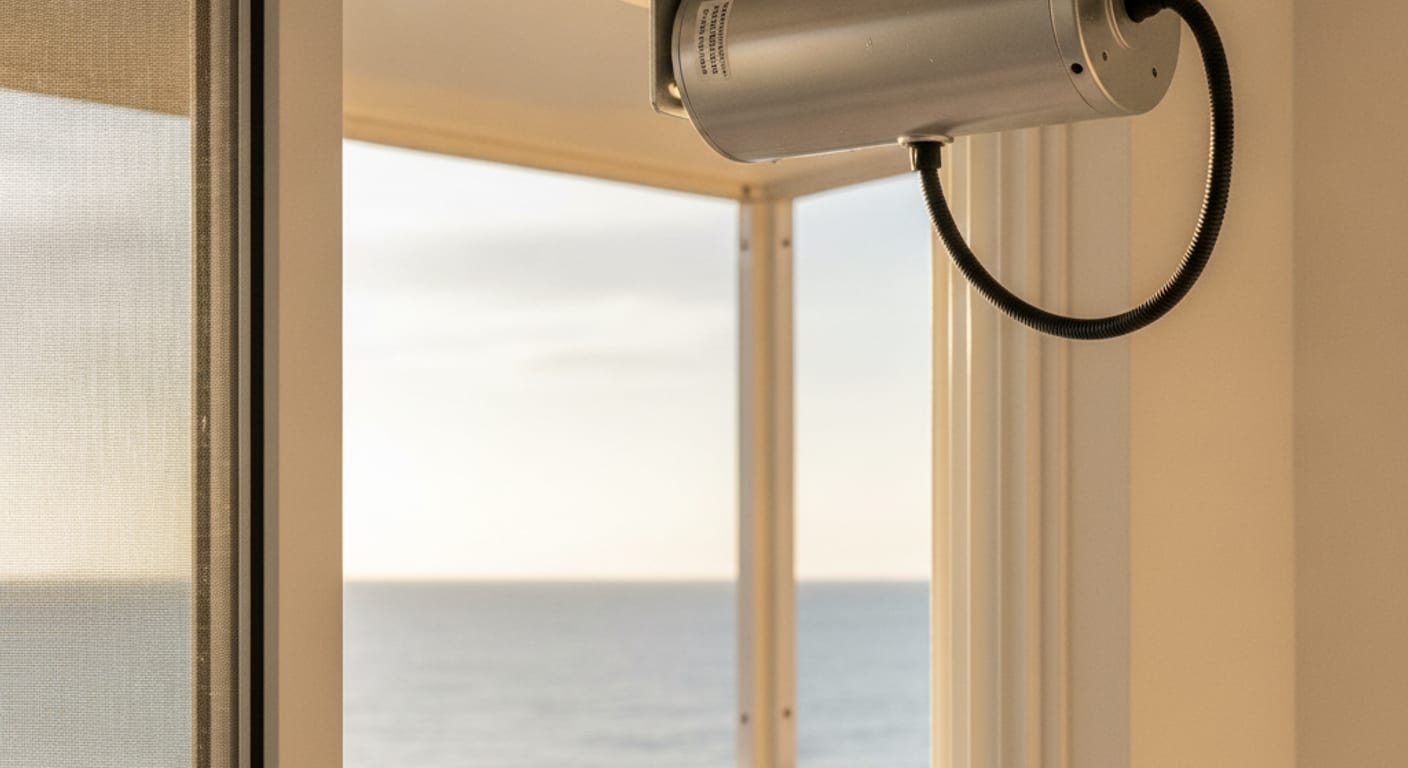
Motorized shades add a genuine convenience benefit on barrier-island properties, but the motor housing and any exposed components need real corrosion resistance to hold up long term. This is a case where cheaping out on hardware costs more over the life of the product, since a failed motor exposed to salt air is a full replacement, not a simple repair.
Well-specified motorized shades with marine-rated components can absolutely handle Gulf Beaches exposure, they just need to be spec’d correctly from the start rather than treated as a standard inland install.
Hurricane shutters and salt exposure
The same corrosion principles apply directly to hurricane-rated shutters, which are permanently mounted exterior structures by definition and face constant salt exposure on every barrier-island property. Accordion and roll-down systems on Gulf-front homes need marine-grade anchoring and hardware to perform reliably over their expected service life, and this is worth confirming specifically with any installer quoting shutter work on a waterfront property.
A practical inspection schedule for barrier-island homes
Given the accelerated wear salt air causes, waterfront and barrier-island homeowners benefit from a more frequent inspection routine than an inland property would need. Checking exterior-facing hardware twice a year, once heading into hurricane season in late spring and once after the season wraps in late fall, catches early corrosion signs, a stiffening motor, a bracket showing surface rust, before they become a full failure requiring emergency replacement.
This matters even more for seasonal or part-time residents. A property that sits closed up for weeks or months between visits doesn’t get the benefit of someone noticing a shade that’s started to bind or a motor that’s running slower than it used to. Snowbird owners and vacation-rental properties in particular should build a pre-arrival or pre-season check into their routine, since salt-air corrosion doesn’t pause just because nobody’s home to notice it.
What to ask an installer before committing
For any exterior-facing treatment on a Gulf Beaches property, ask directly whether the hardware being quoted is marine-grade or standard interior-grade. Ask about the expected service life given your specific property’s salt exposure, since a Tierra Verde waterfront estate and an inland Pinellas Park home face genuinely different conditions even though both fall under the same general product category. And ask what the warranty covers specifically related to corrosion, since a standard warranty may not address salt-related failure the same way it addresses a manufacturing defect.
Budgeting for the real lifespan, not the sticker price
When comparing quotes on a Gulf-front property, factor in expected service life alongside upfront cost. A cheaper exterior-facing install with standard hardware that needs replacing in five years can end up costing more over a decade than a pricier marine-grade install that lasts fifteen or twenty. This is a straightforward long-term math problem, but it’s easy to lose sight of when comparing two bids that look similar on the surface but spec entirely different hardware underneath.
Ask any installer quoting exterior work on a waterfront property to itemize exactly what hardware grade they’re using, not just the shade or shutter product itself. Two quotes for the same visible product can carry very different real costs once you account for how long the underlying components will actually hold up against constant salt exposure.
Why does hardware corrode faster on the Gulf Beaches than inland?
Salt particles carried in Gulf-front and Intracoastal air settle on metal surfaces and accelerate oxidation well beyond what the same metal experiences a few miles inland. Standard aluminum brackets and motor components can corrode within a handful of years on a barrier-island property, compared to fifteen or twenty years for the same hardware inland.
What material holds up best against salt air?
Marine-grade stainless steel and specially coated aluminum hold up best for exterior hardware. Vinyl and PVC-composite products, including faux wood blinds and poly shutters, also resist salt-air degradation well since the material itself doesn’t corrode. Real wood is the most vulnerable material in this environment.
Do interior windows need the same salt-resistant hardware as exterior installs?
No. Interior rooms with no direct outdoor air exposure don’t face meaningfully accelerated salt-air wear. The real risk concentrates on exterior-facing installs, motorized lanai screens, exposed tracks near a pool deck, or anything with sustained direct exposure to outdoor air.
Can motorized shades handle Gulf Beaches salt exposure?
Yes, if they’re specified correctly with marine-rated motor housings and components from the start. Standard interior-grade motorized hardware will corrode faster than expected in direct salt exposure, so it’s worth confirming with your installer that exterior-facing components are rated for the environment.
If you’re dealing with corroded hardware or planning a new install on a Gulf-front or Intracoastal property, call (727) 000-0000 and we’ll connect you with a local installer who specs the right materials for your exposure level, whether you’re in Tierra Verde or anywhere else along the coast.