Real wood blinds look great in a showroom and in a lot of homes further north. In Pinellas County, they can also warp, crack, or swell within a couple of years if they end up in the wrong room. This isn’t a knock on wood as a material, it’s a straightforward moisture problem, and the fix is knowing which rooms can handle real wood and which ones need a composite instead.
Why humidity is the real issue, not heat
Wood blinds don’t fail because Florida is hot. They fail because wood is porous, and it absorbs and releases moisture as humidity swings throughout the day. A bathroom that fills with steam every morning, a kitchen with a dishwasher running nearby, or a laundry room with a washer venting warm, damp air all put real wood blinds through a moisture cycle they weren’t built for.
Over months and years, that cycle causes the wood to swell slightly, dry out, swell again, and eventually the slats warp, crack along the grain, or stop sitting flat against each other. Once a slat has warped, there’s no fixing it. The whole blind needs replacing.
Homes without consistent air conditioning make this worse. A vacation property or a beach cottage that sits closed up for weeks between visits loses the steady climate control that keeps humidity swings in check, which is exactly the kind of environment where real wood blinds age fastest.
Where faux wood wins outright
Faux wood is a PVC composite engineered to look like real wood without the moisture vulnerability. It resists humidity completely, so it won’t warp, crack, or fade in:
Bathrooms, where steam and standing moisture are a daily reality regardless of ventilation.
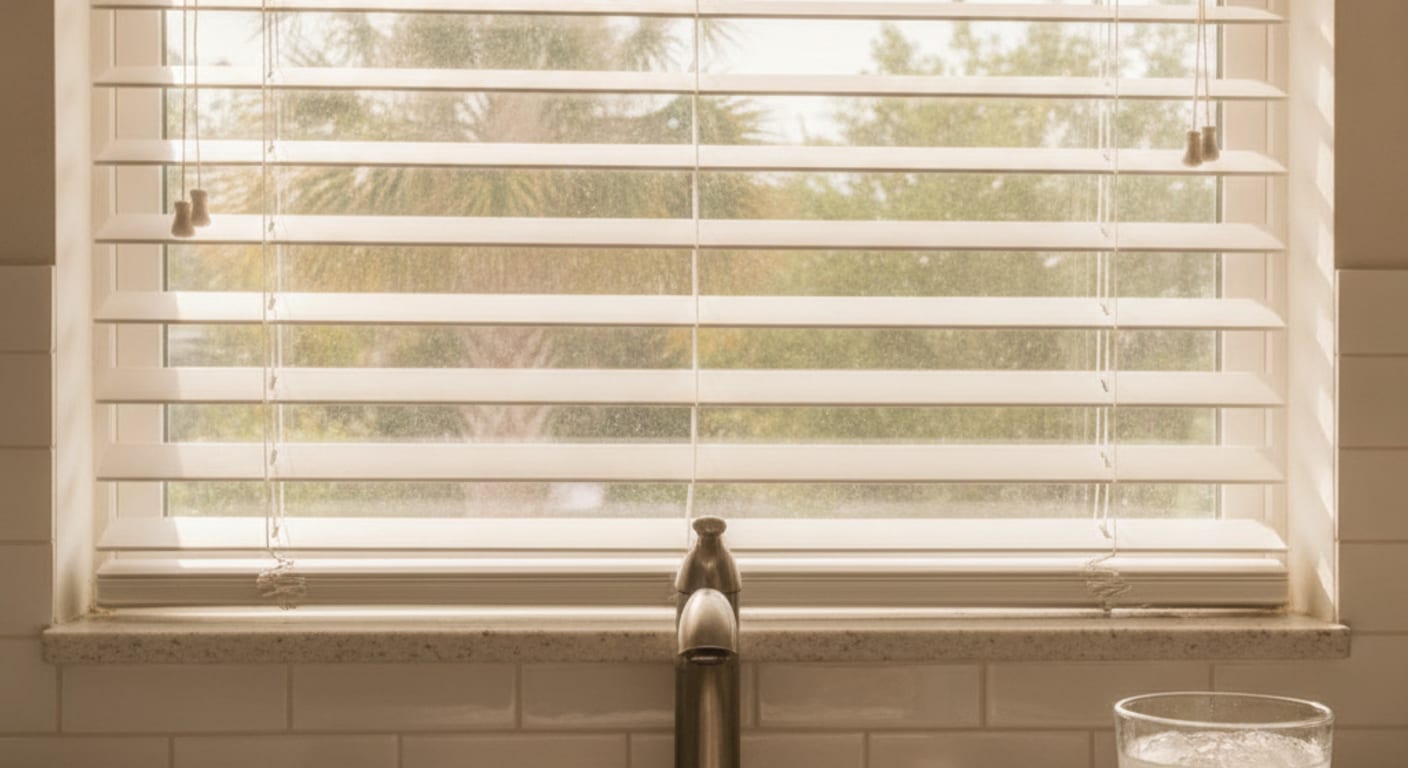
Kitchens, especially near a sink, dishwasher, or a window that catches steam from cooking.
Laundry rooms, where a vented dryer or a top-load washer adds humidity to the air on a regular basis.
Sunrooms and Florida rooms, which often run without full-time AC and see direct sun on top of humidity.
Vacation rentals and second homes, where nobody’s around to catch a warping slat before it’s a bigger problem.
Faux wood typically runs $10-25 per square foot installed, generally less than real wood, which makes the moisture-resistance advantage close to a free upgrade in these rooms.
Where real wood still makes sense
Real wood isn’t obsolete in Florida. It performs well and looks genuinely better in rooms that stay climate-controlled year-round: formal living rooms, primary bedrooms, home offices, and dining rooms in a primary residence with consistent AC.
Real wood is also lighter than faux wood for large windows, which matters on oversized openings where a heavy composite slat can start to sag over time. For a big picture window in a living room that never sees direct moisture exposure, real wood is often the better long-term choice both visually and structurally.
Real wood typically runs $20-40 per square foot installed, and the price difference is one more reason to be selective about where it goes rather than specifying it throughout an entire house.
The mixed-material approach most homeowners land on
If neither faux wood nor real wood blinds feel right for the room, plantation shutters in a poly construction solve the same humidity problem with a more built-in, permanent look, worth considering for a whole-room upgrade rather than a like-for-like blind swap.
In practice, most of the custom blinds projects we route across Pinellas County end up mixing materials by room rather than picking one product for the whole house. Real wood in the living room and bedrooms, faux wood in the kitchen, bathrooms, and laundry room. It’s a practical split that gets the look most homeowners want in the rooms that matter most for style, while protecting the investment in rooms where humidity will win eventually regardless of how careful anyone is.
This matters even more in an older St. Petersburg bungalow or a beach cottage without central air running constantly, where humidity swings are bigger and less predictable than in a newer, tightly sealed home.
What this looks like in a beach house specifically
Homes closer to the Gulf face a compounding problem: salt-tinged humid air plus a property that often sits empty between visits or rental turnovers. A real wood blind in a Gulf-facing bedroom of a vacation home that’s occupied two weekends a month is a near guarantee of warping within a couple of seasons, since nobody’s running AC steadily to keep humidity in check while the house is empty.
For vacation rentals and part-time residences on the beaches, faux wood is close to the default recommendation across the board, not just in bathrooms and kitchens, simply because the whole property behaves more like a high-humidity environment than a full-time, climate-controlled home does.
What to ask before you order
If a showroom or online retailer doesn’t ask which room a blind is going into before quoting material, that’s worth a second thought. A good installer will ask about the room’s humidity exposure, whether it’s climate-controlled full-time, and how the home is used (primary residence versus vacation property) before recommending faux wood or real wood.
It’s also worth asking directly about warranty coverage for warping or cracking. Faux wood generally carries stronger warping warranties precisely because manufacturers know it’s the moisture-resistant option, and a real wood product installed in the wrong room can void a warranty that assumed reasonable humidity conditions.
Long-term care and maintenance differences
Cleaning and upkeep also split along the same lines as humidity resistance. Faux wood wipes down with a damp cloth and mild cleaner with no risk of water damage, which makes it forgiving for a busy household or a rental property where cleaning happens inconsistently between guests.
Real wood needs a dry dusting approach and an occasional wood-safe cleaner, never a wet wipe-down, since introducing extra moisture during cleaning defeats the purpose of keeping it in a dry room to begin with. Over years, real wood slats in a well-maintained, climate-controlled room can develop a richer patina that faux wood can’t replicate, which is part of the ongoing appeal for homeowners willing to manage that upkeep.
Weight is a related, practical consideration. Faux wood is noticeably heavier per square foot than real wood, which matters on oversized windows where a heavy composite slat can eventually stress the headrail mechanism or cause a slight sag over years of daily use. This is one more reason real wood tends to win out on very large openings in formal rooms, provided the room stays consistently air-conditioned.
Don’t forget cordless requirements
Whichever material you choose, current federal safety rules require most window coverings sold in the U.S. to be cordless or have no operating cords a child can reach. That applies equally to faux wood and real wood, so factor a cordless or motorized lift system into your decision regardless of which material wins out for a given room.
Will real wood blinds actually warp in a Florida bathroom?
Yes, in most cases, and often faster than homeowners expect. Steam and standing moisture from daily use put real wood through repeated swelling and drying cycles that eventually crack or warp the slats. Faux wood resists this completely and is the standard recommendation for any bathroom.
Is faux wood noticeably cheaper than real wood?
Yes. Faux wood typically runs $10-25 per square foot installed versus $20-40 for real wood, roughly half in many cases. Given that faux wood also resists Florida’s humidity better, it’s often the better value in rooms where moisture is a factor, not just the cheaper option.
Can I mix faux wood and real wood in the same house?
Yes, and it’s the approach most homeowners in this market end up choosing. Real wood works well in consistently air-conditioned formal rooms and bedrooms, while faux wood covers bathrooms, kitchens, laundry rooms, and any space without full-time climate control.
Does faux wood look noticeably different from real wood?
Modern faux wood products are engineered with realistic wood-grain texture and color options, and from a few feet away the difference is subtle for most people. Up close, particularly on a stained or premium finish, real wood still has an edge in texture and depth, which is part of why it remains popular for formal, close-up-viewed rooms.
Not sure which rooms in your home need which material? Call (727) 000-0000 and we’ll connect you with a local installer who can walk your house room by room and give you a straight recommendation, whether you’re in Clearwater or out on the beaches.