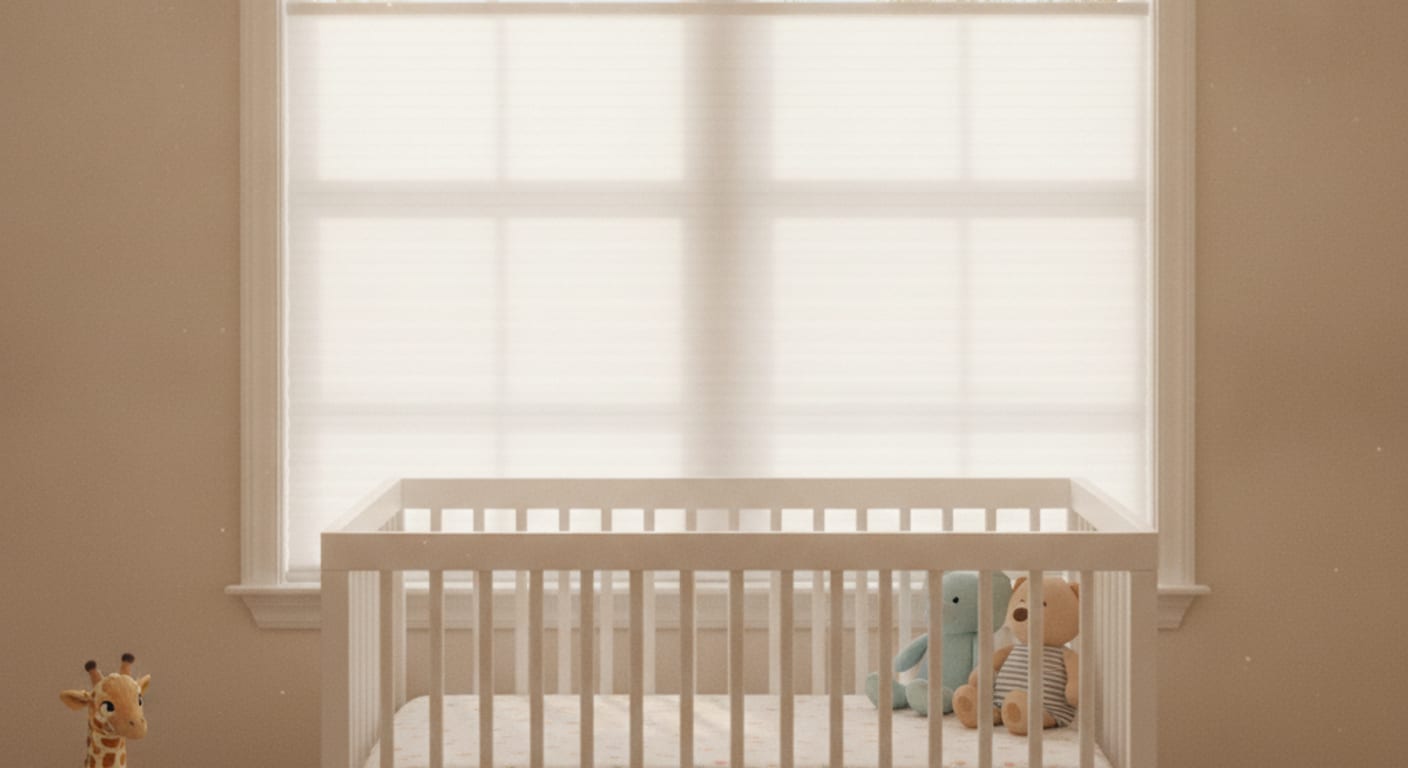
Corded window blinds have been a documented strangulation risk for young children for decades, and in December 2022 the Consumer Product Safety Commission (CPSC) put teeth into that concern with a federal rule change. If you’re buying new window coverings, inherited a house full of older blinds, or have grandkids visiting more often these days, here’s what the rule actually says and what it means for your windows.
What the rule actually requires
Since December 2022, federal safety rules require most stock window coverings sold in the United States to be cordless or to have no operating cords a child can reach. This applies to blinds, shades, and similar products sold ready-made through retail channels, whether that’s a big-box store, an online retailer, or a home goods shop.
Custom-order window treatments, the kind measured and built for a specific home, carry the same underlying safety intent even though the regulatory mechanics differ slightly from stock retail products. Any installer worth hiring in this market defaults to cordless or motorized lift systems as standard practice now, not an upsell.
The rule targets accessible operating cords specifically, meaning cords a child could reach, wrap around their neck, or get tangled in. It doesn’t ban cords outright in every configuration, but the practical result across the industry has been a near-total shift toward cordless and motorized designs for anything marketed to a general audience.
Why this rule exists
Corded blinds have caused documented child injuries and fatalities for years, generally involving either the outer pull cord or the inner cord that runs through the slats or fabric. Young children, particularly toddlers who are mobile but not yet able to free themselves from a tangled cord, are the primary risk group, though the danger doesn’t disappear entirely as kids get slightly older.
This isn’t a hypothetical concern manufactured for a rule change. It’s the reason child safety advocates pushed for stronger standards for years before the CPSC rule finally took effect, and it’s why the industry response has been broad rather than a narrow compliance workaround.
What to check if you have older blinds in the house
If your home has blinds or shades installed before the rule change, they weren’t required to meet current standards at the time and may still have accessible cords. This is common in older Pinellas County homes, particularly on the beaches where a lot of housing stock is original to the 1960s and 1970s and window coverings have never been updated.
Walk through your home and check each window covering for an exposed pull cord, an inner cord loop, or a wand-and-cord combination that a small child could reach or pull down to their level. If grandkids or young relatives visit even occasionally, not just as full-time residents, it’s worth addressing rather than assuming the risk only applies to households with young kids living there permanently.
Your options for bringing older blinds up to current standards
You have a few paths depending on budget and how much you want to keep the existing hardware.
Cord cleats and cord tensioners are a partial fix that secures loose cords out of reach, but they require someone to actually use them correctly every time, which makes them less reliable than a true cordless redesign. They’re better than nothing but not the recommended long-term fix.
Retrofitting or converting an existing corded blind to cordless operation is often possible during a repair visit, particularly for custom blinds that are otherwise in good shape. This is frequently more cost-effective than a full replacement and brings an older treatment up to current standards without starting from scratch.
Full replacement with cordless or motorized products is the most thorough option, particularly if the existing blinds are already showing wear beyond just the cord issue, faded slats, a sticking headrail, or a tilt mechanism that’s stopped working reliably.
What cordless actually looks like in practice
Cordless doesn’t mean you lose functionality. Modern cordless lift systems use a simple push-up, pull-down motion, sometimes called a spring-lift mechanism, with no cord at all to manage. You grip the bottom rail and move the shade by hand, no wand, no cord, no mechanism a child could get tangled in.
Motorized systems go a step further, operating from a remote, an app, or a wall switch. This solves the child-safety issue completely while also addressing reach problems on tall windows, an added benefit for anyone dealing with both concerns at once.
Cellular shades in particular are one of the easiest treatments to get right on this front, since the honeycomb structure lends itself naturally to clean cordless lift mechanisms without sacrificing the insulation benefits the product is known for.
Cost of going cordless
Retrofitting an existing corded blind to cordless operation typically runs less than a full replacement, and pricing depends on the specific mechanism and blind type. A full cordless replacement follows the same general pricing as any custom blind or shade project, roughly $10-40 per square foot depending on material, with no meaningful cost premium just for choosing cordless over corded given that cordless is now the standard default across the industry.
Motorized upgrades add more, typically $150-400 per window over a standard cordless version, but that’s a comfort and reach upgrade on top of the safety baseline, not a requirement to meet current standards.
A simple walkthrough checklist
If you want to check your own home room by room, look for a few specific things at each window. First, is there a pull cord or beaded chain hanging within a child’s reach, generally anything a toddler standing on a bed, chair, or windowsill could grab. Second, does the blind have an inner cord loop, the kind that runs through the back of the slats or fabric, which poses a similar risk even if the outer cord looks secured. Third, check whether any existing cord cleats or tensioners are actually installed and in use, since a cleat sitting unused in a drawer doesn’t protect anyone.
Pay particular attention to windows near cribs, changing tables, or any furniture a young child could climb to reach a window. Bedrooms and playrooms deserve the closest look, but don’t skip living rooms and kitchens, since kids spend plenty of time in shared spaces too, especially when grandparents or other relatives are watching them.
Beyond blinds: think about the whole room
Cord safety isn’t limited to window coverings alone. If you’re addressing blinds specifically because of a grandchild who visits regularly, it’s worth a broader look at the room, outlet covers, furniture anchoring, anything else that wasn’t a concern when the house was set up for adults only. Window coverings are simply one of the more overlooked items on that list because they blend into the background of daily life.
What is the 2022 cordless blind rule?
Since December 2022, federal safety rules from the Consumer Product Safety Commission require most stock window coverings sold in the U.S. to be cordless or have no operating cords a child can reach. Custom-order products carry the same underlying safety intent, and cordless or motorized lift systems are now the industry default.
Do I have to replace all my old corded blinds right away?
There’s no requirement to replace existing installed blinds retroactively just because the rule changed. That said, if young children or grandchildren are in the house regularly, addressing accessible cords, either through retrofit or replacement, is a real safety step worth prioritizing rather than delaying.
Can I convert my existing blinds to cordless instead of replacing them?
Often, yes. Converting a corded lift to a cordless or motorized system during a repair visit is frequently more cost-effective than full replacement, particularly if the rest of the blind is in good shape. Ask your installer whether your specific blinds are a good candidate for conversion.
Are motorized shades required, or is cordless enough?
Cordless meets the current safety standard on its own. Motorization is an additional comfort and reach upgrade, not a requirement. Many households choose cordless as the baseline and add motorization selectively on hard-to-reach or oversized windows.
If you’ve got older corded blinds in a home where kids or grandkids spend time, call (727) 000-0000 and we’ll connect you with a local installer who can assess whether a retrofit or full replacement makes more sense for your windows, whether you’re in Largo or anywhere else across the county.