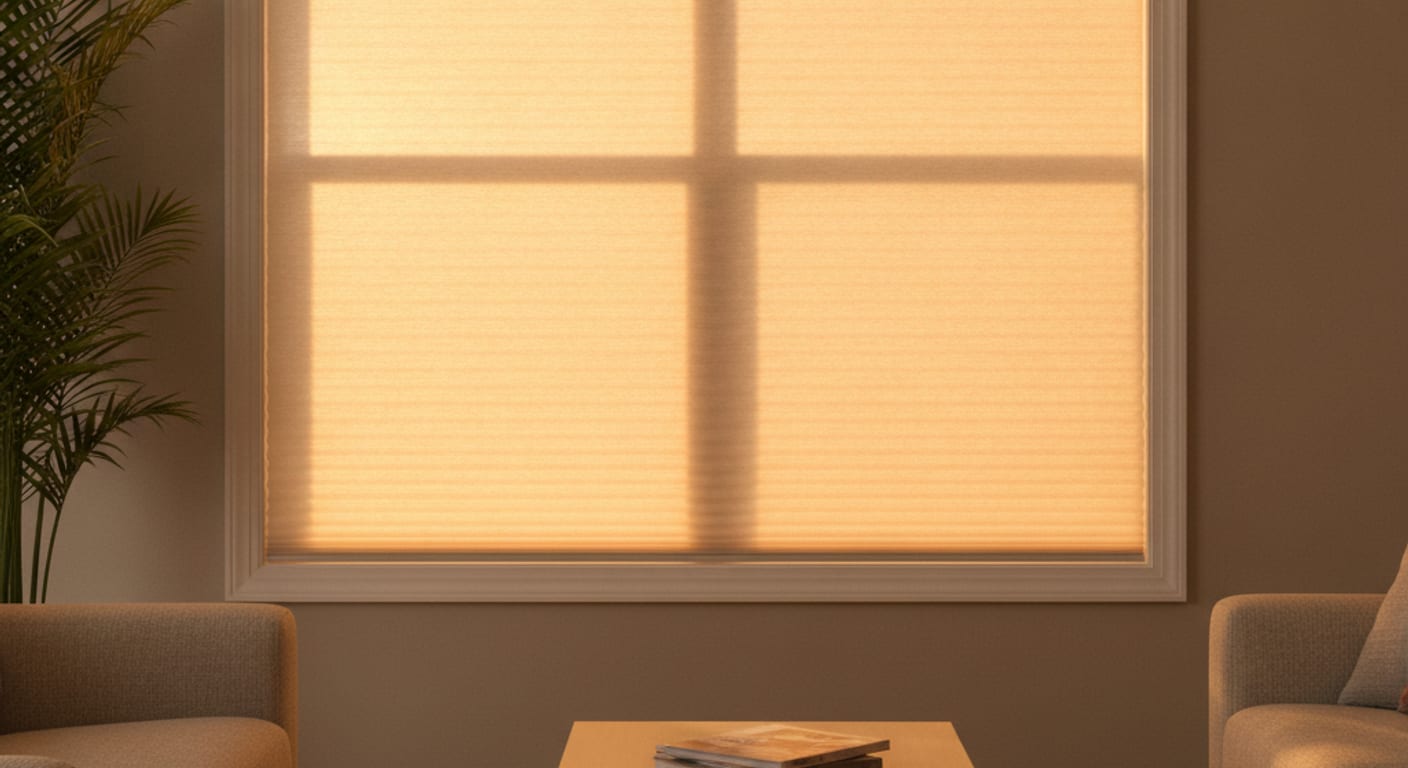
Florida households run air conditioning nearly year-round, and a west-facing room with older single-pane glass can carry a real, measurable share of a summer power bill. Cellular shades are one of the more cost-effective upgrades available for that problem, but the actual savings depend heavily on which construction you choose and which rooms you target.
Why the honeycomb shape matters
A cellular shade, sometimes called a honeycomb shade, folds into a repeating pocket structure rather than lying flat like a roller shade or a standard blind. Each pocket traps a layer of still air against the glass, and trapped air is a genuinely effective insulator, which is the entire mechanism behind the product’s energy performance.
This isn’t marketing language dressed up as physics. Independent testing on double-cell honeycomb shades generally shows a meaningful reduction in heat transfer through the glass compared to bare windows or a flat treatment like a roller shade, and that reduction translates into measurably lower AC runtime in rooms that see heavy sun exposure.
Single-cell versus double-cell
Single-cell shades have one row of honeycomb pockets. They’re thinner, more affordable, and still offer a real insulation benefit over a standard roller shade or blind, but the insulating air layer is smaller.
Double-cell shades stack two rows of pockets, trapping meaningfully more air and delivering noticeably better insulation value. They cost more and add a bit more bulk to the window, but for a room with heavy sun exposure or older single-pane glass, the extra insulation typically pays back the price difference over time in reduced cooling demand.
Single-cell shades typically run $200-400 per window installed. Double-cell runs $350-550. The right choice depends on the room’s actual sun exposure and how much you’re trying to offset an existing cooling cost problem versus simply adding a baseline improvement.
Where the savings are real and where they’re modest
The honest picture: cellular shades won’t replace a full window upgrade, and nobody should expect them to erase a high electric bill on their own. Where they do make a measurable difference:
West-facing rooms. Florida’s afternoon sun hits west-facing glass hardest, typically from early afternoon through sunset, and this is where insulating shades show the clearest benefit.
Older single-pane windows. Homes without low-E or double-pane glass lose and gain heat through the window itself far more readily, which means an insulating shade has more work to do and shows a bigger relative improvement.
Rooms without existing efficient glass upgrades. If your windows already have modern low-E double-pane glass, cellular shades still help, but the marginal improvement is smaller since the window itself is already doing more of the insulating work.
Where the effect is more modest: east-facing or shaded rooms with limited direct sun exposure, and homes that already have high-performance glass throughout. In those cases, cellular shades still add comfort and light control value, just less of a dramatic energy story.
What this looks like on an actual Pinellas home
A lot of the cellular shades work we route across the county follows a similar pattern: a homeowner notices one or two rooms, usually a west-facing living room or primary bedroom, running noticeably hotter than the rest of the house by late afternoon, and the AC working harder to compensate. Targeting those specific rooms with double-cell shades, rather than doing the whole house uniformly, is often the most cost-effective approach, putting the higher-insulation product where it does the most work.
In older housing stock around Kenneth City, Lealman, and other inland communities where homes weren’t built with today’s energy standards in mind, this kind of targeted upgrade tends to show up clearly in a summer electric bill, since the baseline inefficiency was higher to begin with.
Cellular shades versus window film
Window film is a different approach to the same underlying problem, applied directly to the glass rather than covering the window with a separate treatment. Solar window film reduces heat and UV transmission through the glass all day long without requiring anyone to open or close anything, which makes it strong for consistent heat control in rooms people forget to manage manually.
Cellular shades add real insulation value and full light control on demand, but only when they’re actually lowered. A number of homeowners in the hottest rooms end up using both together, film on the glass for constant heat rejection, cellular shades behind it for insulation and privacy control when needed.
Top-down/bottom-up as a bonus feature
Many cellular shades come with a top-down/bottom-up lift option, letting you lower the shade from the top of the frame, the bottom, or both independently. This is worth mentioning in an energy-efficiency conversation because it means you don’t have to choose between insulation and daylight. You can keep the top of a window covered for privacy or shading while still letting light in through the bottom, which matters in bedrooms and rooms facing the street.
Pairing shades with the rest of your home’s efficiency picture
Cellular shades work best as one piece of a broader efficiency approach rather than a standalone fix expected to carry the whole load. Attic insulation, duct sealing, and a properly sized AC system all matter more to your overall bill than window treatments alone, and a home with poor attic insulation won’t see the same relative benefit from insulating shades as a home where the bigger efficiency gaps are already addressed.
That said, windows are one of the more visible and immediate places to make a targeted improvement without a major renovation, which is part of why cellular shades come up so often as a starting point. If you’re planning a broader energy audit or upgrade project, mention your window treatment plans to whoever’s doing the assessment, since the combined effect of insulated glass coverage and attic or duct improvements tends to compound rather than simply add up separately.
Skylights and hard-to-reach openings
Cellular shades aren’t limited to standard vertical windows. Skylight-rated cellular shades are available for homes with roof glazing, which is common in Florida rooms and additions built to bring in natural light without a full window wall. These typically require a specialized track and lift system given the angle and overhead mounting, and they’re worth asking about specifically if a skylight is contributing to a hot room the same way a west-facing window would.
What to expect for install and lift systems
Custom cellular shades take about 2-3 weeks to fabricate after measuring, and install runs under an hour per window. Federal safety rules require cordless or motorized lift systems on new window coverings, which cellular shades handle cleanly given the honeycomb structure’s natural fit with clean cordless mechanisms.
How much do cellular shades actually cut cooling costs?
Independent testing on double-cell honeycomb shades generally shows a meaningful reduction in heat transfer through the glass, often enough to measurably lower AC runtime in rooms with heavy afternoon sun exposure. The effect is strongest on west-facing windows and homes without low-E or double-pane glass, and it works best as a targeted upgrade rather than a whole-house fix.
Single-cell or double-cell, which do I actually need?
Double-cell makes sense for west-facing rooms, older single-pane windows, or anyone specifically trying to cut a high AC bill, since it traps more air and delivers noticeably better insulation. Single-cell is the more affordable option and still offers real benefit over a standard blind, but with a smaller insulating advantage.
Should I do the whole house or just the hot rooms?
Targeting the rooms with the worst sun exposure first, typically west-facing living areas and bedrooms, usually gives you the best return per dollar spent. A whole-house project isn’t wrong, but if budget is a factor, prioritizing by actual heat exposure gets you the biggest comfort and cost benefit sooner.
Do cellular shades work better than window film for energy savings?
They solve slightly different problems. Film blocks heat and UV through the glass constantly without any action needed. Cellular shades add insulation and full light control, but only when lowered. Many homeowners in the hottest rooms use both together for the strongest combined effect.
If you’ve got a room that runs hot every afternoon and want a real number on what cellular shades would cost for your specific windows, call (727) 000-0000 and we’ll connect you with a local installer, whether you’re in Pinellas Park or anywhere else in the county.