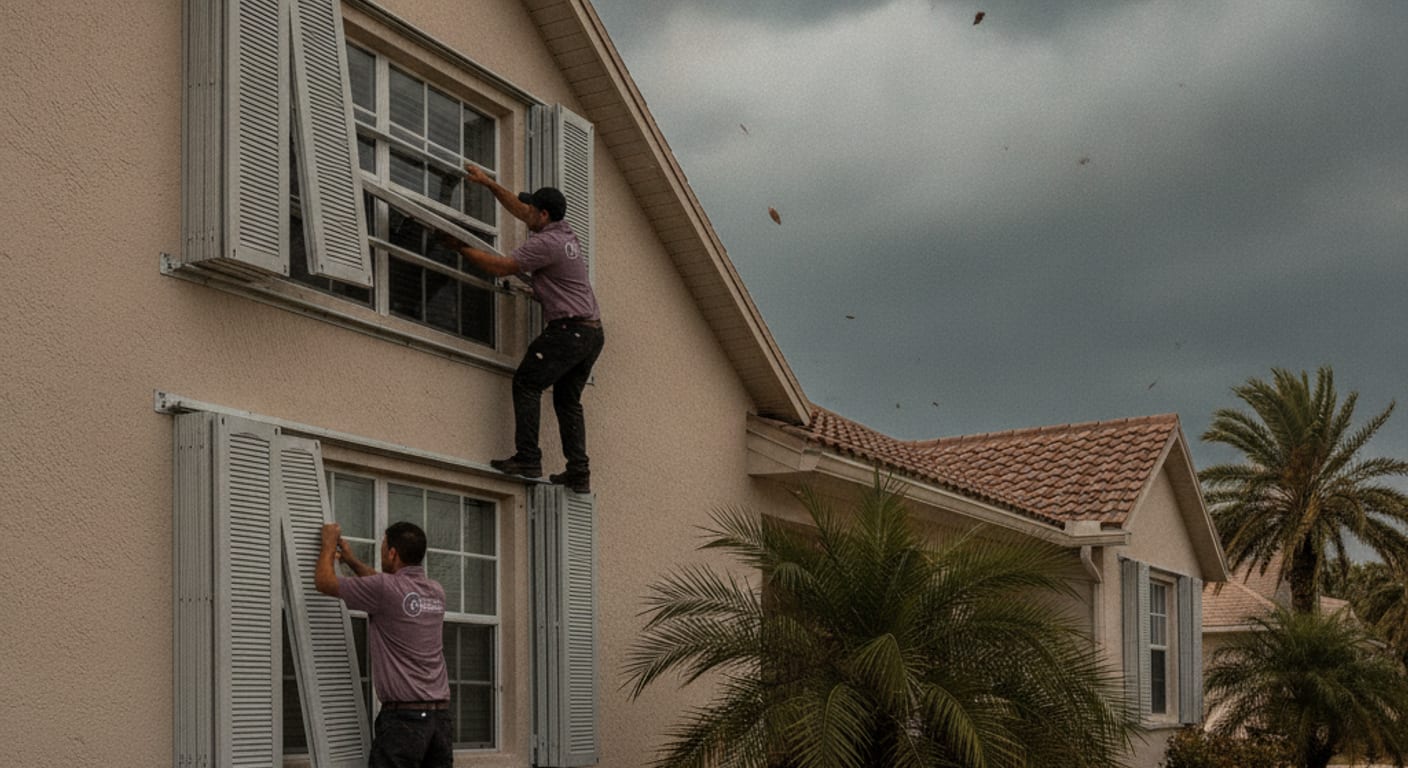
The short answer is that most existing Pinellas County homes don’t have a blanket legal requirement to carry hurricane shutters. The longer, more useful answer is that Pinellas sits inside a specific Florida Building Code zone that does require protected openings under certain circumstances, and knowing which category your home or project falls into matters a lot more than the short answer suggests.
Wind-borne debris region versus High-Velocity Hurricane Zone
These two terms get used interchangeably in casual conversation, and they shouldn’t be. They’re different standards with different rules.
The High-Velocity Hurricane Zone (HVHZ) applies only to Miami-Dade and Broward counties. It carries the strictest wind and impact requirements in the state, and products approved for HVHZ use go through a more rigorous testing and approval process. Pinellas County is not in the HVHZ, and any marketing or contractor claim implying otherwise is worth double-checking.
The wind-borne debris region is a broader Florida Building Code designation that does include Pinellas County, along with most of coastal Florida. Homes and structures in this region that meet certain wind-speed and location criteria are required to have protected openings, meaning impact-rated glass or code-rated shutters, on new construction, additions, and in many cases window or door replacements.
The practical difference: Pinellas requirements are real but less strict than what Miami-Dade or Broward homeowners deal with, and it’s worth knowing that distinction before a contractor quotes you HVHZ-rated products you may not actually need.
When protection is actually required
New construction in the wind-borne debris region generally needs protected openings as part of the building permit process, full stop. This isn’t optional and gets checked during inspection.
Home additions that add new window or door openings typically trigger the same requirement for those new openings, even if the rest of the existing home isn’t required to be retrofitted.
Window and door replacements often trigger the requirement too, depending on the scope of the project and your specific jurisdiction’s interpretation of the code. This is one of the more commonly misunderstood parts of the rule, since a homeowner replacing a single window for cosmetic reasons might not expect a code trigger, but many building departments do require protected glazing or shutters on replacement openings in this region.
Existing homes with no active construction or permit project generally aren’t required to retrofit protection, which is why you’ll see plenty of older Pinellas homes with no shutters or impact glass at all. That’s legal. It’s also a real risk during an actual storm, which is a separate conversation from the legal requirement.
HOA and condo association rules are a separate layer
Some HOAs and condo associations set their own hurricane protection requirements independent of what state code requires, sometimes as part of a building-wide update or a new construction standard for the community. If you’re in a managed community, check your association’s governing documents in addition to county code, since an HOA rule can be stricter than the state minimum even when state code alone wouldn’t require anything.
What this means if you’re building or renovating
If you’re pulling a permit for new construction, an addition, or a significant window and door replacement project in Pinellas County, plan for protected openings as part of the scope rather than an afterthought. Working this into the original project budget and design is considerably cheaper than retrofitting shutters or impact glass onto a home after the fact.
This is also where a lot of homeowners weigh hurricane-rated shutters against impact-rated glass as the two paths to compliance. Impact glass handles protection permanently with no seasonal action required, but it’s a bigger upfront investment tied to the windows themselves. Shutters cost less initially and give you flexibility (accordion and roll-down styles stay mounted year-round; storm panels store away between seasons), but they require action before a storm, whether that’s a one-button motorized close or physically installing panels.
Buying an existing home with no protection
If you’re purchasing a Pinellas County home built before current wind-borne debris rules took effect and it has no shutters or impact glass installed, that’s not unusual and it’s not automatically a red flag on the title or the sale. It is worth factoring into your own risk assessment and insurance conversation, since homeowners insurance premiums and wind mitigation credits often reflect what protection, if any, is currently installed.
Ask the seller or your inspector directly what protection currently exists, and don’t assume decorative interior shutters count. Decorative plantation shutters are an interior furnishing with no structural rating whatsoever. Hurricane-rated shutters are a completely different, code-engineered exterior product, anchored directly into the home’s structure. The two get confused constantly because they share a name, but they solve entirely different problems.
Verifying who you’re hiring
Permanently anchored structural shutter systems generally require a building permit in every Pinellas jurisdiction, and the work should be performed by someone holding the appropriate Florida contractor license for that scope of work. Before signing anything, verify a contractor’s license status directly at myfloridalicense.com rather than taking a business card or a truck decal at face value. This takes a few minutes and confirms the license is active and in good standing.
We’re a referral service, not a contractor ourselves. We connect you with local installers, and part of that process includes making sure you have what you need to verify credentials on your own before work begins.
Wind mitigation and insurance considerations
Beyond the strict legal requirement question, a lot of Pinellas County homeowners look into shutters or impact glass because of what it does for a homeowners insurance premium, not just because code requires it. Florida insurers generally offer wind mitigation credits for homes with documented storm protection features, and the specific discount depends on your insurer, your home’s construction, and what protection is actually installed and verified.
A wind mitigation inspection, typically performed by a licensed inspector, documents what your home has, roof-to-wall connections, opening protection, roof covering type, and generates a report insurers use to calculate premium credits. If you’re installing shutters primarily for the insurance benefit, ask your installer whether the specific product you’re choosing qualifies for wind mitigation credit in your insurer’s eyes, since not every storm-protection product is treated the same way across every policy.
A note on rebates and credits
Homeowners sometimes ask about tax credits or utility rebates for storm protection upgrades. Rebate programs change and run out, and the amounts available shift year to year, so confirm what’s currently active directly with your utility provider or a tax professional at the time you’re getting quotes, rather than relying on a number you saw referenced somewhere else.
Checking your specific jurisdiction
Building code enforcement in Pinellas County happens at the municipal level in most cases, meaning St. Petersburg, Clearwater, Largo, and the smaller cities each administer permitting through their own building department, generally following the same underlying Florida Building Code but sometimes with local interpretation differences on edge cases like partial window replacements. If you’re unsure whether a specific project triggers the protected-openings requirement, a quick call to your city or county building department before finalizing plans is worth the ten minutes it takes, since getting this wrong after a permit is already pulled can mean a costly change order mid-project.
Are hurricane shutters legally required in Pinellas County?
Not for most existing homes as a blanket requirement, but new construction, additions, and many window and door replacements do need protected openings under Florida’s wind-borne debris region rules, which apply to Pinellas County. Some HOAs also set independent requirements.
What’s the difference between Pinellas’s requirements and Miami-Dade’s?
Miami-Dade and Broward counties fall under the High-Velocity Hurricane Zone, a stricter standard with more rigorous product testing requirements. Pinellas is in the broader wind-borne debris region, a real but less strict set of rules. Products rated for one region aren’t automatically the right spec for the other.
Do I need a permit for hurricane shutters?
Yes, permanently anchored structural shutter systems generally require a building permit in every Pinellas jurisdiction. Removable storm panels sometimes fall under different rules depending on your specific municipality, so confirm with your local building department before assuming either way.
How do I know if my contractor is properly licensed?
Ask to see their license and verify it directly at myfloridalicense.com before signing any contract. This confirms the license is active, in good standing, and appropriate for the scope of work, whether that’s the CBC/CRC building classification or another relevant category.
Whether you’re buying protection for the first time or replacing panels that have gotten too heavy to manage alone, call (727) 000-0000 and we’ll connect you with a local installer who can assess your home and walk you through what code actually requires for your project, from Clearwater Beach to inland Pinellas.